How to Keep Competition Communications Clear from Application to Awards

If you missed it, start here: From Applications to Awards: Mapping the Full Competition Season. Building on that comprehensive overview, this article focuses specifically on maintaining clarity and consistency in communication throughout the competition season. Clear communication is essential for young artist concerto and classical/instrumental music competitions to ensure smooth operations from initial applications through to final awards.
The next logical question is: How can competition communication workflow be optimized for clarity and efficiency?
After understanding the full competition timeline, the next step is to explore how communication can be structured to support every stage effectively. Competition communication workflow involves coordinating messages to applicants, judges, and administrators while managing deadlines, requirements, and adjudication processes. Optimizing this workflow reduces confusion, missed deadlines, and administrative overhead.
Focusing on the specific needs of classical and instrumental music competitions, this article outlines practical strategies and mechanisms to keep communications clear and aligned.
Understanding the competition communication workflow
The competition communication workflow is the structured process through which all stakeholders receive timely, accurate, and relevant information throughout the competition season. It encompasses initial announcements, application instructions, eligibility clarifications, performance submission guidelines, adjudication updates, and award notifications.
Clear workflow design ensures that communications are consistent, reduce participant questions, and support administrative completeness. This is especially critical in young artist concerto and classical/instrumental music competitions where repertoire rules, instrument eligibility, and division criteria must be communicated precisely.
- Eligibility and division criteria communications
- Performance submission and repertoire requirements
- Deadline reminders and fee notifications
- Adjudication process updates
- Award announcements and follow-ups

Establishing clear eligibility and application communications
One of the earliest and most critical communication points is clarifying eligibility and application requirements. Young artist concerto and classical/instrumental competitions often have strict rules about accepted instruments, repertoire, age divisions, and residency or enrollment status. Clear, detailed communications prevent ineligible applications and reduce administrative review time.
Communicating performance submission requirements early ensures applicants understand what recordings or scores are needed, the format specifications, and deadlines. This clarity supports a smooth application review and adjudication process.
Using standardized templates and checklists for eligibility and application communications helps maintain consistency across all announcements. Automated reminders and FAQs can further reduce applicant confusion and administrative workload.
- Detailed eligibility criteria by instrument and division
- Clear repertoire and performance submission instructions
- Application deadlines and fee payment reminders
- Standardized communication templates
- Automated applicant FAQs and reminders

Streamline Your Competition Communications
Discover how operational communications can keep judges, applicants, and administrators informed and aligned throughout your competition workflow.
Coordinating adjudication updates and judge communications
Once applications are submitted, clear communication with judges is essential to maintain adjudication workflow integrity. Judges need timely access to contestant materials, scoring guidelines, and deadlines for each round. Providing structured updates and reminders helps keep the judging process on schedule and consistent.
Additionally, communicating adjudication results promptly to administrators and applicants ensures transparency and supports timely progression to subsequent rounds or awards ceremonies.
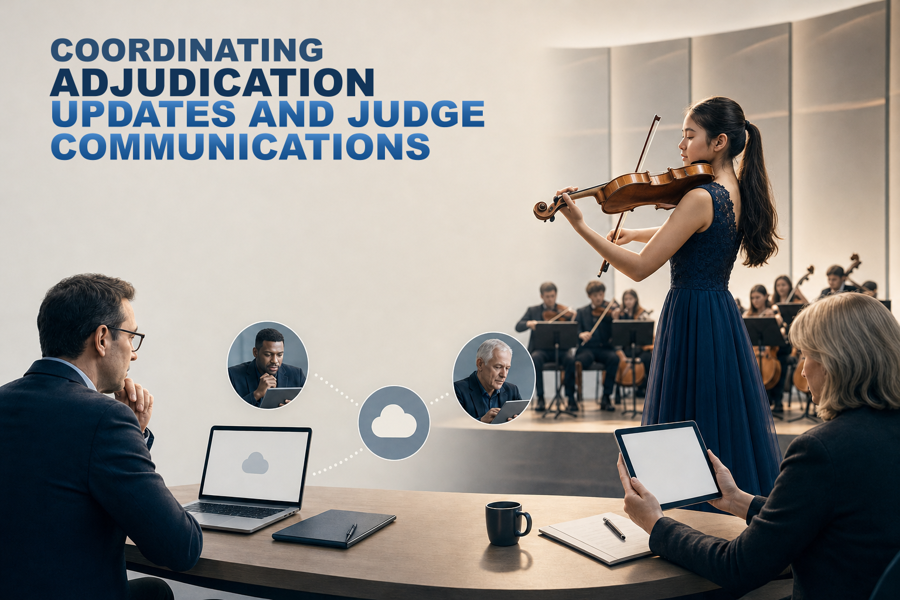
Effective adjudication communication often involves secure portals for judges to access materials, automated notifications for scoring deadlines, and clear protocols for handling conflicts or discrepancies. These measures uphold fairness and clarity throughout the judging process.
- Secure judge access to contestant materials
- Automated reminders for scoring deadlines
- Clear adjudication guidelines and scoring rubrics
- Transparent communication of results to applicants and staff
- Protocols for conflict resolution and score verification
Managing award notifications and post-competition communications
After adjudication concludes, clear communication regarding awards and next steps is vital. Notifications should specify award details, recital or performance opportunities, and any required follow-up actions. This clarity enhances participant experience and supports organizational professionalism.
Post-competition communications may also include feedback summaries, thank-you notes, and invitations to future events, reinforcing community engagement and encouraging repeat participation.
Using personalized messaging and scheduled communications helps ensure award recipients and participants feel recognized and informed. Integrating these communications into the overall competition workflow maintains consistency and reduces administrative effort.
- Personalized award notifications with clear instructions
- Follow-up messages with feedback and next steps
- Thank-you communications to participants and judges
- Invitations to future competitions and events
- Integration of awards communication into overall workflow
How These Ideas Work Together
Clear communication throughout eligibility, adjudication, and awards phases forms a cohesive workflow that supports every stakeholder in the competition. Early clarity on application requirements reduces errors and administrative burden. Coordinated judge communications ensure fair and timely adjudication. Thoughtful award notifications enhance participant experience and organizational reputation.
By integrating these communication mechanisms into a unified workflow, competition administrators can streamline operations, reduce confusion, and maintain a professional environment tailored to the unique needs of young artist concerto and classical/instrumental music competitions.
Key Takeaways
- Clear eligibility and application communications prevent ineligible entries and reduce questions.
- Structured adjudication updates keep judges informed and on schedule.
- Personalized award notifications improve participant satisfaction and engagement.
- Automated reminders and templates increase administrative efficiency.
- A unified communication workflow supports seamless competition management from start to finish.
Advance Your Competition Communications with a Unified Workflow
Apply what you've learned about maintaining clear communication by exploring how a complete competition workflow integrates setup, applications, judging, and awards to streamline your entire season.
What Comes Next
The next article, Building a Reliable Competition Schedule: Deadlines, Rounds, and Milestones, will continue this series by focusing on how to organize and manage the competition timeline effectively. It will build on the communication strategies discussed here by emphasizing scheduling best practices that keep all participants aligned and the competition running smoothly.
Frequently Asked Questions
Provide detailed eligibility criteria in all application materials, use clear language specific to instruments and divisions, and offer FAQs or contact options for clarification.
Use secure portals for sharing materials, send automated reminders for deadlines, provide clear scoring rubrics, and establish protocols for questions or conflicts.
Send personalized messages with clear instructions on awards and next steps, include deadlines for any required responses, and follow up with thank-you notes and feedback.
Yes, many aspects such as reminders, application confirmations, and adjudication updates can be automated using competition management software to improve efficiency and consistency.