How to Build a Clear Young Artist Competition Application Process

Establishing a clear and effective young artist competition application process is essential for ensuring a smooth experience for both applicants and administrators. This article focuses on practical steps and considerations tailored to classical and instrumental music competitions, helping organizers create a transparent and manageable application workflow.
The next logical question is: How can we design an application process that balances clarity, fairness, and operational efficiency?
Competition administrators often ask how to structure the application process to minimize confusion and errors while maintaining fairness for all young artists. The challenge lies in setting clear eligibility criteria, submission requirements, and deadlines that are easy to understand and follow.
Additionally, the process must integrate smoothly with the broader competition workflow, including fee collection, communication, and adjudication.
Understanding the Foundation of a Young Artist Competition Application Process
The young artist competition application process is the structured sequence of steps through which contestants submit their materials and information for evaluation. This foundation ensures that all participants are assessed on a level playing field and that the competition runs efficiently.
Key elements include eligibility verification, repertoire guidelines, submission formats, deadlines, fees, and communication protocols.
- Eligibility and division criteria based on age and instrument
- Accepted instruments and repertoire specifications
- Clear performance submission requirements including video or audio formats
- Transparent deadlines and fee structures
- Consistent contestant communication and confirmation
Defining Eligibility, Divisions, and Repertoire Requirements
Setting clear eligibility rules is the first step in the application process. This typically includes age limits and division categories that reflect different skill levels or instrument groups. For example, divisions may be organized by age brackets such as 12-15 and 16-18, and by instrument families like strings, woodwinds, or piano.
Repertoire requirements must be carefully outlined to ensure fairness and consistency. Accepted repertoire should align with the competition’s focus on classical and instrumental music, specifying piece length, composer periods, and difficulty levels.
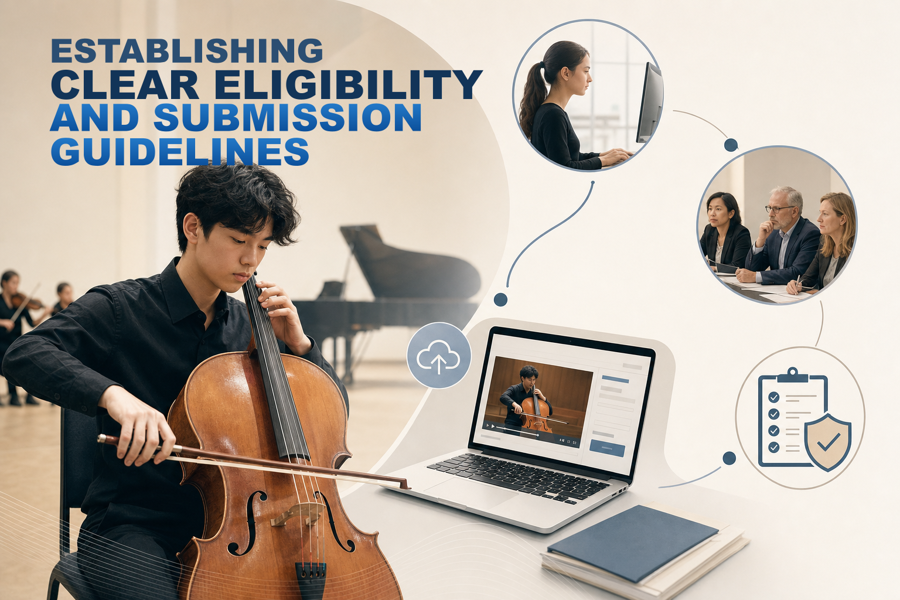
Providing detailed repertoire guidelines helps applicants prepare appropriate submissions and assists adjudicators in evaluating performances consistently. Clear division definitions also help avoid confusion and ensure that young artists compete against peers of similar experience.
- Age-based divisions (e.g., Junior, Intermediate, Senior)
- Instrument-specific categories (e.g., violin, cello, piano)
- Repertoire length limits (e.g., 10-15 minutes)
- Composer and style restrictions focused on classical repertoire
- Restrictions on original compositions or arrangements
See How the Application Process Fits Into the Bigger Workflow
See how applications, fees, review, communication, and judging connect across the competition lifecycle.
Establishing Submission Requirements, Deadlines, and Fees
Submission requirements must be explicit and practical. Most young artist competitions require video or audio recordings of performances, with clear instructions on format, length, and quality. Written materials such as repertoire lists, biographies, and proof of age or enrollment may also be necessary.
Deadlines should be realistic and well-communicated to avoid last-minute issues. Fee structures must be transparent, with clear payment methods and refund policies if applicable.

Automating submission intake and fee collection through an online platform can reduce administrative burdens and improve accuracy. Clear communication about deadlines and fees helps applicants plan appropriately and reduces inquiries.
- Accepted file formats and size limits for performance recordings
- Required supporting documents (e.g., age verification, repertoire list)
- Firm application and submission deadlines with reminders
- Transparent fee amounts and payment options
- Policies on late submissions and fee refunds
Managing Contestant Communications and Application Completeness
Effective communication is critical throughout the application process. Contestants should receive confirmation of receipt, reminders of upcoming deadlines, and notifications about any missing or incomplete materials. Clear instructions reduce confusion and improve the quality of submissions.
Administrators should implement checklists or automated systems to verify application completeness before advancing contestants to the adjudication phase. This ensures fairness and reduces delays.

Maintaining open and timely communication channels also helps build trust with participants and supports a professional competition atmosphere. Providing FAQs and contact information can further assist applicants.
- Automated confirmation emails upon application submission
- Reminders for upcoming deadlines and missing documents
- Use of checklists to verify application completeness
- Clear contact points for applicant questions
- Regular updates about competition status and next steps
How These Ideas Work Together
The sections outlined above form an integrated framework for a clear young artist competition application process. Defining eligibility and repertoire requirements sets the stage for fairness and clarity. Establishing submission guidelines, deadlines, and fees ensures operational efficiency and transparency. Finally, managing communications and verifying application completeness supports a smooth experience for both applicants and administrators.
When these elements work together, competitions can attract qualified young artists, reduce administrative errors, and uphold a professional standard that benefits all stakeholders.
Key Takeaways
- Clearly define eligibility and division criteria tailored to classical instruments.
- Specify accepted repertoire and submission formats to ensure fairness.
- Set transparent deadlines and fee policies to streamline administration.
- Implement automated communications to keep applicants informed.
- Verify application completeness before adjudication to maintain standards.
Explore the Full Competition Workflow
See how the stages of a competition connect from application intake through judging and awards.
What Comes Next
The next article in this series, Designing a Fair and Consistent Competition Judging Workflow, will build on this foundation by exploring how to evaluate applications and performances with transparency and consistency, ensuring the integrity of the competition process.
Frequently Asked Questions
Competitions usually focus on classical instruments such as piano, violin, cello, woodwinds, brass, and sometimes voice, depending on the competition's scope.
Submissions are commonly required as video or audio recordings in standard digital formats like MP4 or MP3, with clear guidelines on length and quality.
Using automated email reminders and posting deadlines prominently on the competition website helps ensure applicants are well informed.
Refund policies vary by competition; it is important to clearly state these policies upfront to avoid confusion.